
Not every door problem calls for a new door. When the door and frame are sound, a targeted repair to the hinges, strike, weatherstripping, threshold or hardware can get an exterior door closing, locking and sealing properly again.
What each symptom usually points to and how it’s typically handled. We confirm the cause in person before recommending any work.
| Problem | Usually points to | Typical outcome |
|---|---|---|
| Sticks or is hard to close | Loose or worn hinges, a sagging door, or seasonal swelling. | Often repairableTightening or replacing hinges and adjusting the door. |
| Deadbolt won’t line up | A sagging door or a strike plate out of position. | Often repairableHinge and strike adjustment. |
| Draft at the edges | Flattened or torn weatherstripping, or a door out of adjustment. | Often repairableNew weatherstripping or a sweep, plus adjustment. |
| Gap or wear at the threshold | A worn sweep, a loose threshold or an unsupported sill. | Depends on the sillAdjustable thresholds can be reset; a rotted sill is a bigger job. |
| Worn or broken hardware | Handlesets, latches or locks that have worn out. | Usually repairableHardware replacement, if the door edge is sound. |
| Water inside the door | Failed sealing, missing flashing or water damage in the frame. | Needs evaluationSmall, local damage may be repairable; extensive rot usually means replacement. |
Repairs only last when the cause is fixed, not just the symptom.
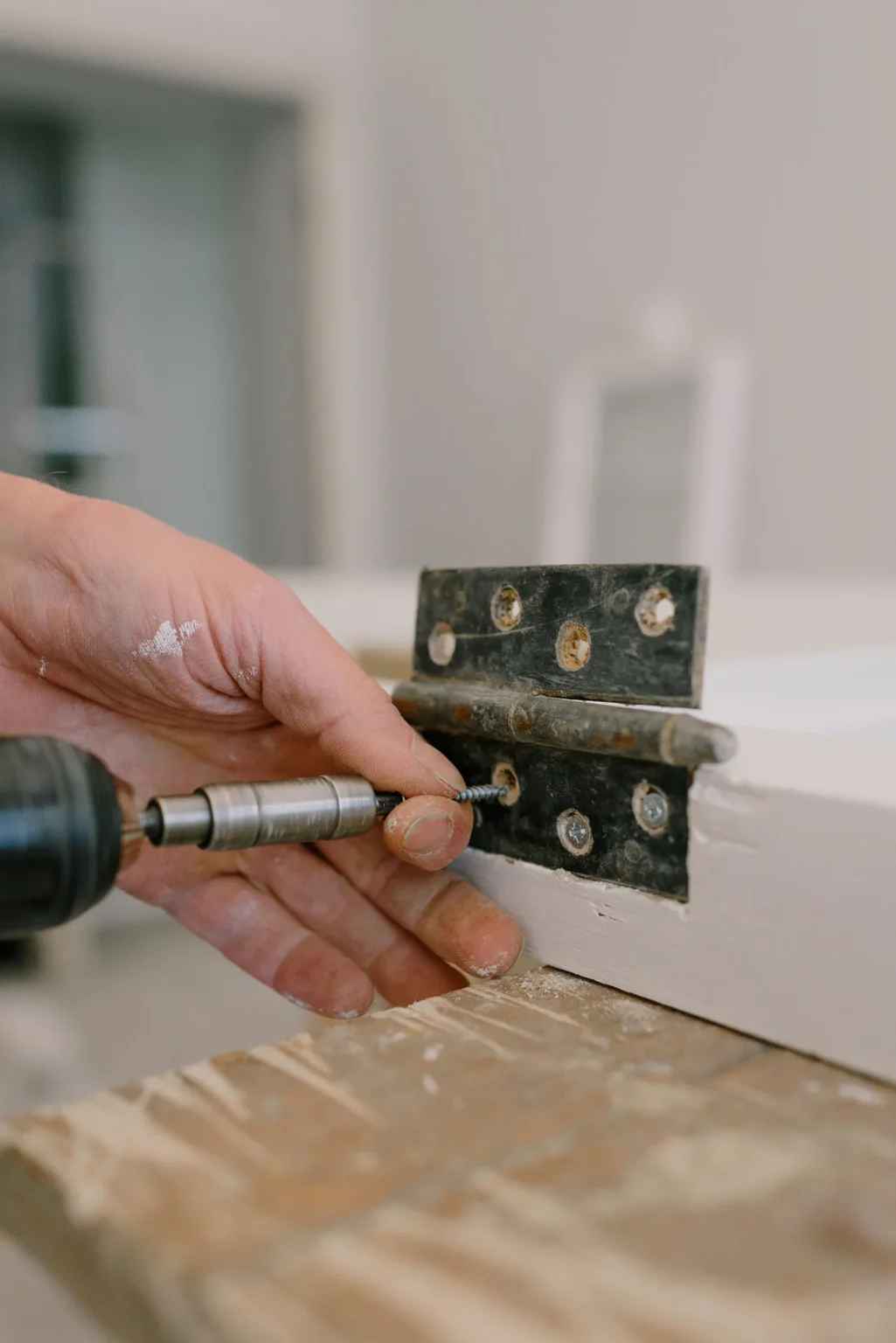
Most sticking doors have sagged on their hinges, so the top corner rubs the frame on the latch side. Tightening hinge screws into solid framing, replacing worn hinges and adjusting the door usually fixes it. Planing the door is a last resort, because it treats the symptom.
If you have to push, pull or lift the door to lock it, the bolt and strike no longer meet. Correcting the hinges comes first; moving the strike plate only makes sense once the door hangs correctly.
Weatherstripping flattens, tears and shrinks with age, and Minneapolis winters make the gaps obvious. Replacing it along with the door sweep is one of the most common and practical door repairs.
An adjustable threshold can be raised to meet the sweep. A sill that flexes underfoot or shows soft wood beneath is a structural problem, and that is where repair can turn into replacement.
Worn handlesets, sticky latches and deadbolts that bind can be replaced. If the edge of the door is split around the lock, the door itself may need attention first.
Water inside the door, stains on the floor or peeling paint at the sill are worth looking at soon. Water damage behind the trim tends to be larger than it looks from outside.