
Both lead outside. They differ in how they open, how much room they need and how they feel to use every day.
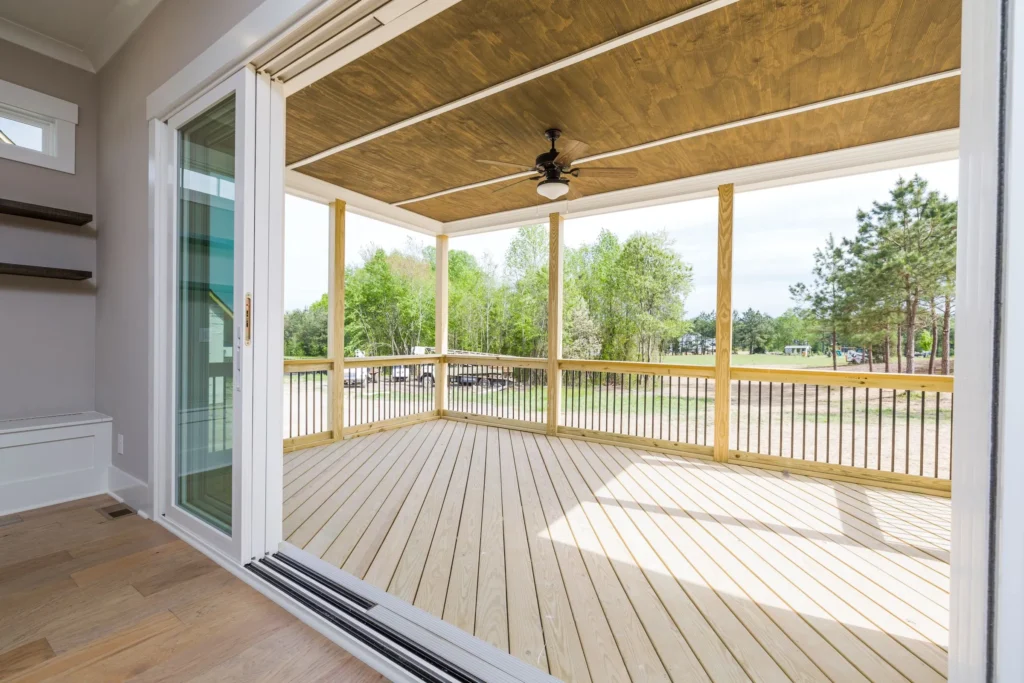
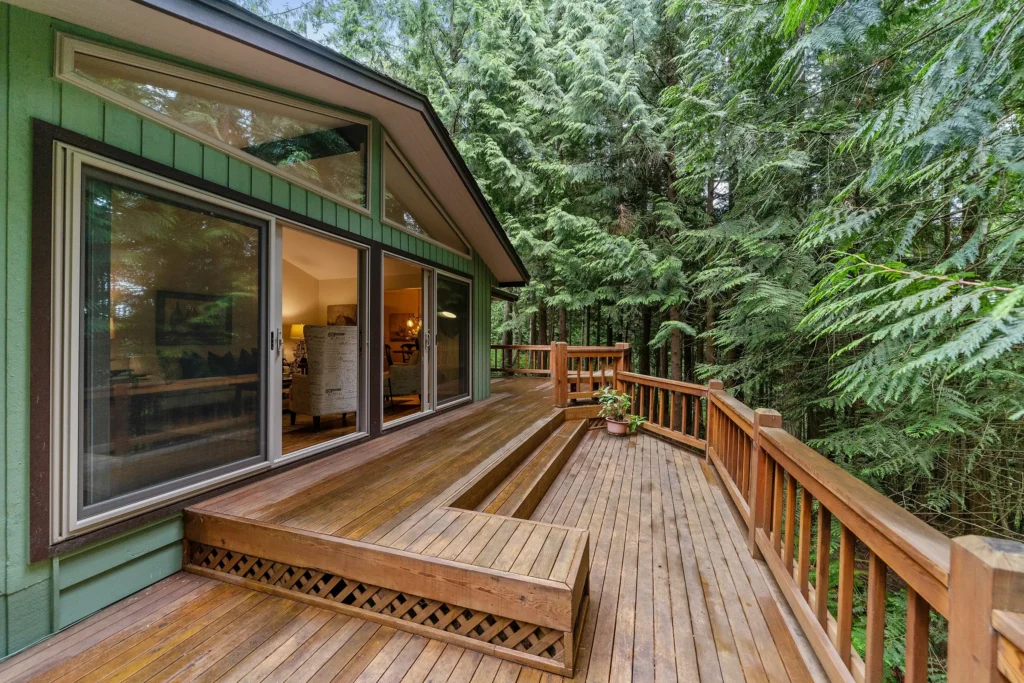
Measure the room as well as the opening.
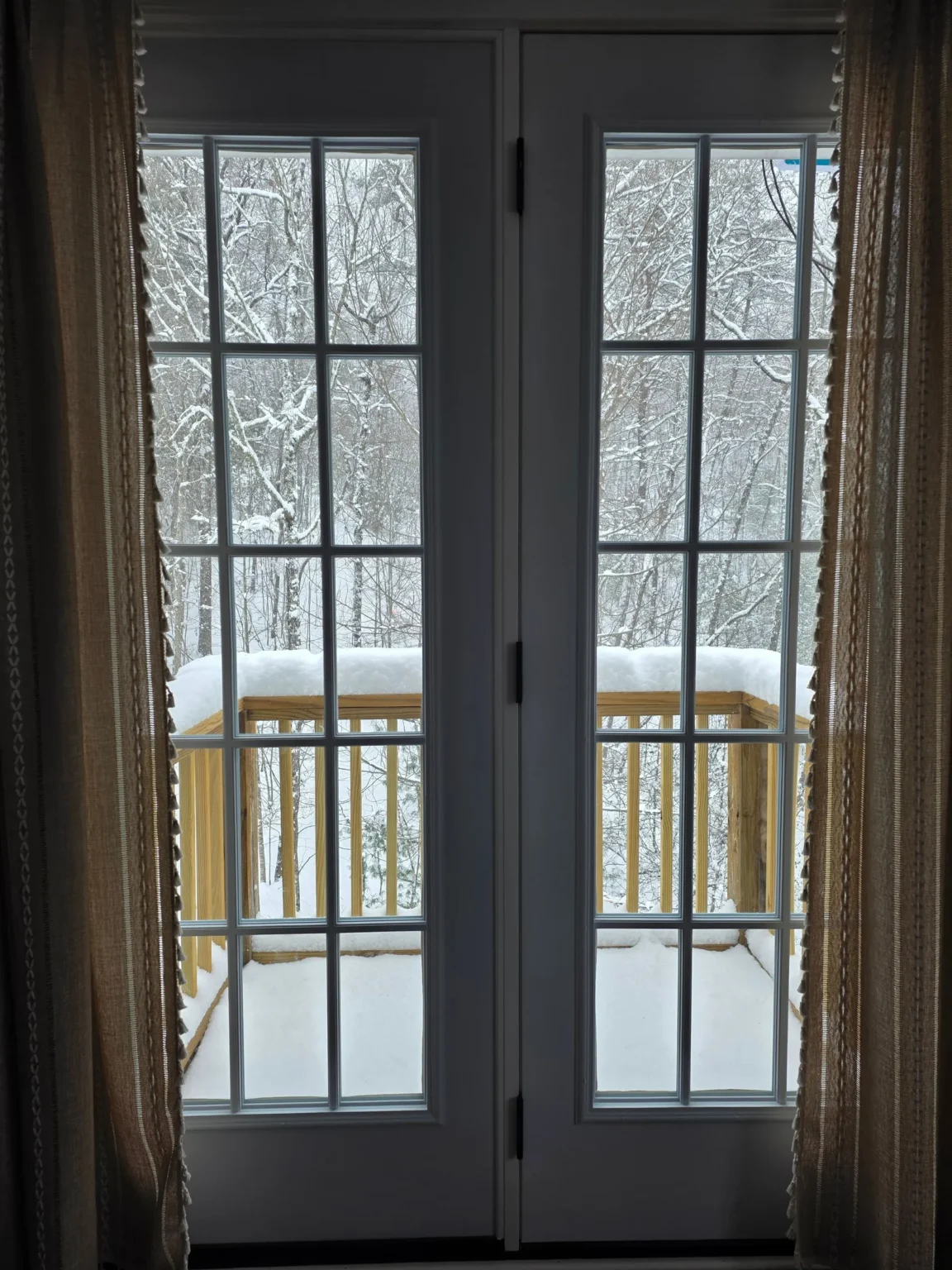
A hinged door needs a clear arc inside or outside. Inswing doors take floor space; outswing doors need room on the deck and must clear railings, grills and snow.
Look at where the table, couch and walkway sit today. A sliding door keeps that layout; a hinged door may change it.
The deck or patio should sit below the door sill so water drains away from it. If an old deck has settled or been raised over the years, the transition at the sill is planned with the door.
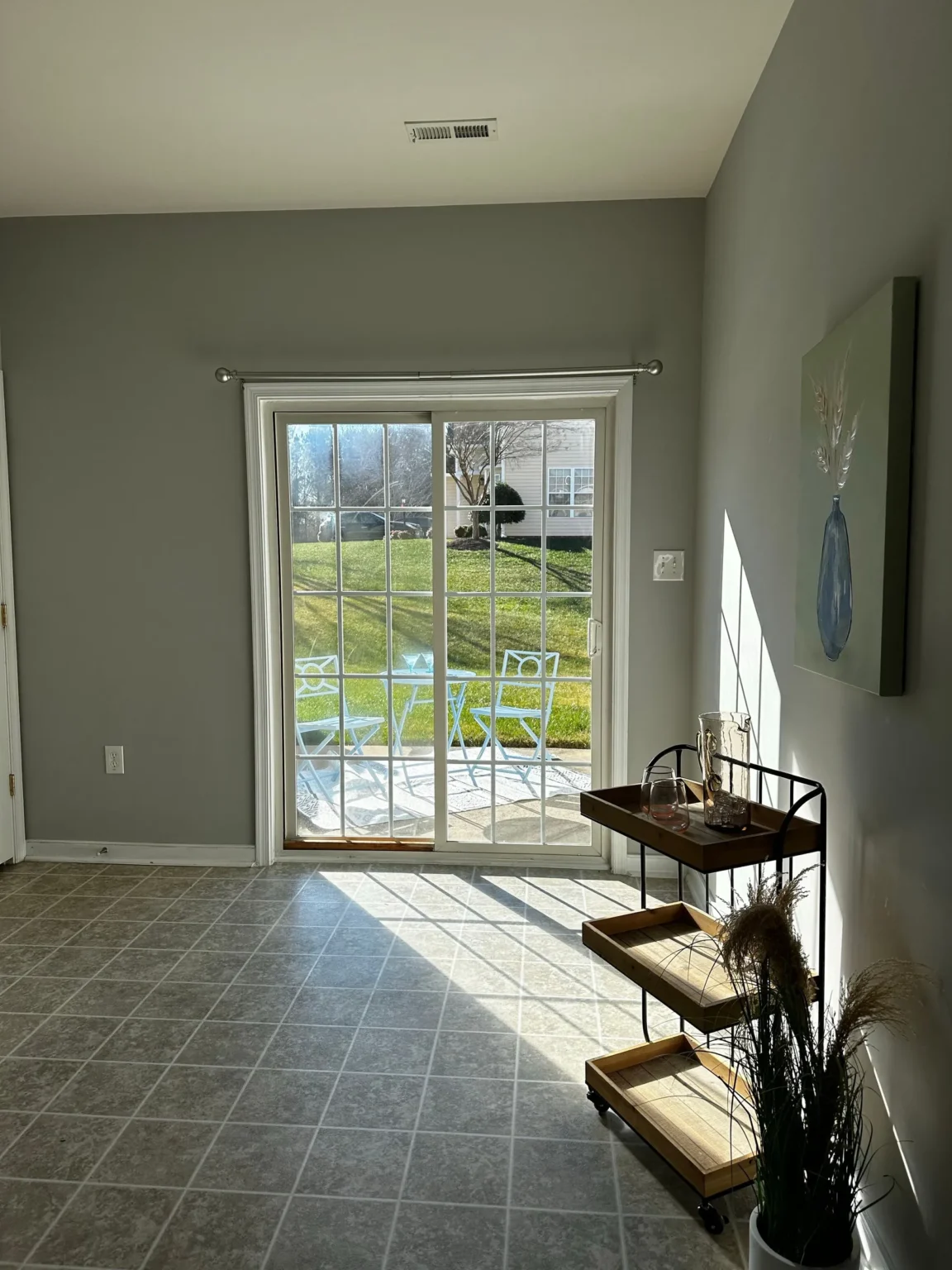
Patio doors are mostly glass, so they shape how a room feels. Think about where the sun comes from, who can see in, and whether you want grilles between the panes or a clear view.
Vinyl is a common frame material for sliding patio doors where low upkeep matters. Andersen patio doors can be considered when a recognized brand option suits the opening and the budget.
A screen that glides easily and a latch that locks firmly are easy to overlook in a showroom and noticed every day at home.
A patio door sill is long and low, which makes it the place where water, snowmelt and drafts get in. The sill needs solid support along its full length, flashing beneath it and a slight slope to the outside.
Minneapolis winters: snow drifts against patio doors and melts on sunny days. A sill set too low or a deck that drains toward the house will show up as water stains inside.
Sliding doors run smoothly when the track is kept clear of grit and the rollers are adjusted. Hinged doors need their hinges and strike checked so the doors meet evenly. Weatherstripping on both types wears and can be replaced.
Some are repairable. When several show up together, it’s time to plan a replacement.
Replacing a patio door usually means removing the old unit and frame, checking the subfloor and framing at the sill, and installing a new unit with fresh flashing, the same steps described under door installation. It is also the moment to change configuration, sliding to hinged or the reverse, if the opening allows.
Fog between the panes means the sealed glass unit has failed. Depending on the condition of the rest of the door, replacement may be the better option. We explain what we find.
In the right opening, yes. Johnson Exteriors did this on a project in Albertville, shown on our door replacement page.
Vinyl patio doors are a common lower-maintenance option, and Andersen patio doors can be considered when they suit the project.
Neither is automatically better. A hinged door seals against a frame on all sides; a sliding door relies on seals along its track and meeting rail. Either performs well when it is installed correctly, sealed at the sill and kept clean and adjusted.
It depends on the size of the opening, the glass and frame, whether you keep the same configuration, and what the sill and framing need. A free on-site estimate from Johnson Exteriors gives you a number based on your actual opening.
Sometimes. Dirty tracks and worn rollers can often be corrected. A bent track or failed glass usually points toward replacement. See door repair.